Sign Up For An Account

Equine Safety Study - BPC-157/TB-500

Key Takeaways:

  • Real-World Applications: Studied exclusively in horses undergoing controlled rehabilitation for naturally occurring soft tissue or bone injuries – reflecting the most common clinical use cases for peptide therapy.

Case Studies:

Veterinarians face the daily challenge of balancing advanced medical care with the profound responsibility of safeguarding their patients’ well-being. For those treating equine athletes, the stakes are even higher—these animals are partners, competitors, and companions whose health directly impacts their performance and quality of life. The complexity of delivering effective, evidence-based treatments underscores the need for solutions that truly make a difference. VetBioLogix is dedicated to advancing veterinary medicine by providing innovative, science-based peptide solutions that enhance the care and performance of equine athletes, while supporting the clinical community with trusted, results-driven products.

Large Wound

– Charley McColough BVetMed, Whetstone Equine

Summary:

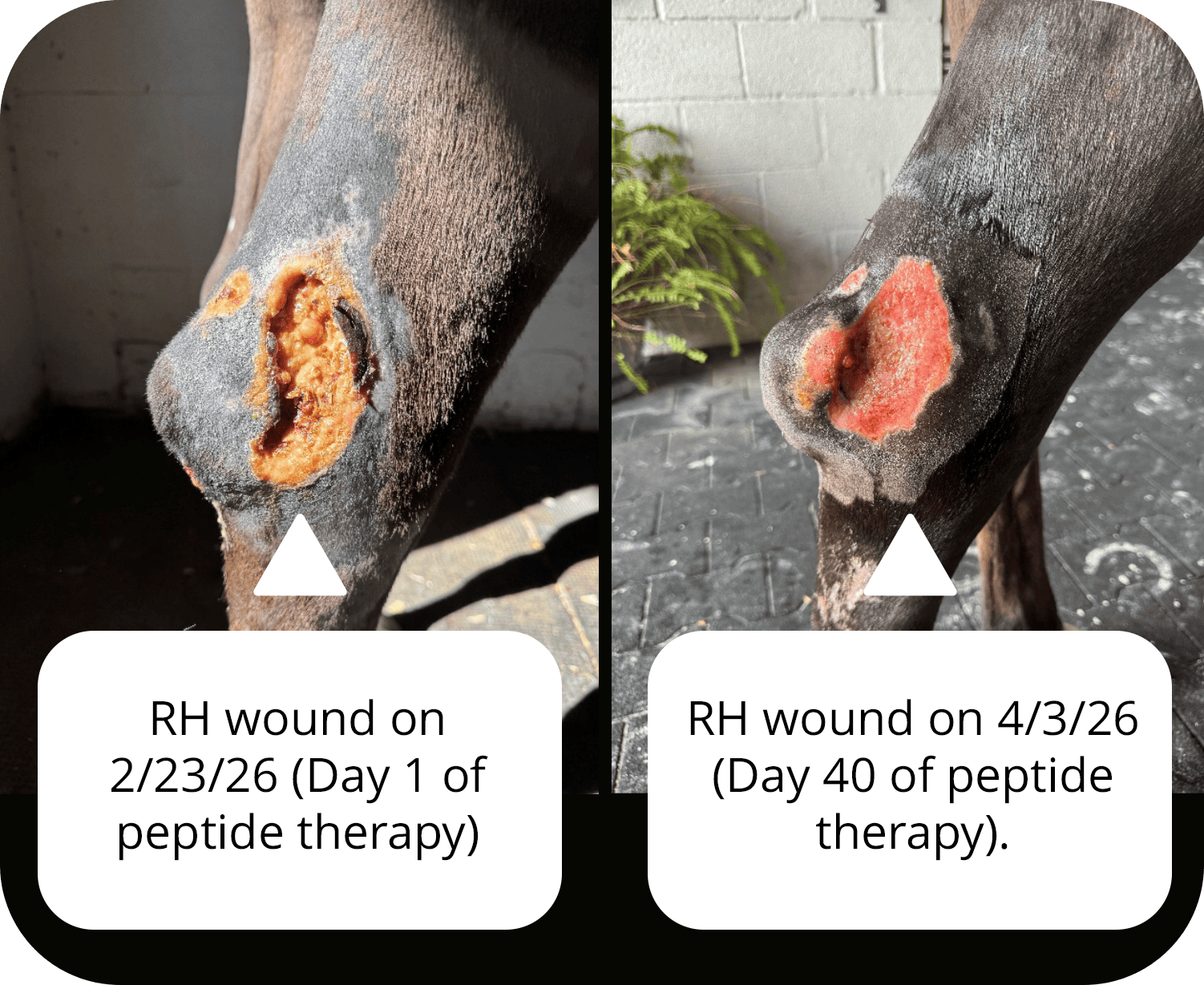
A 16-year-old quarter horse gelding developed a large necrotic wound involving the right lateral hock and calcanean bursa after a severe episode of lymphangitis and cellulitis. Peptide therapy was initiated after the horse suffered significant tissue loss in close proximity to multiple synovial structures. During treatment with BPC-157 and TB-500, administered by subcutaneous injection in the neck, the wound showed increased production of healthy, uniform granulation tissue with a notable reduction of discharge. After the 40 day treatment period, granulation tissue had filled the defect to the level of the surrounding skin. 

Download the Case Study

Superficial Digital Flexor Tendinopathy

– David DaSilva DVM, DaSilva Equine Sports Medicine

Summary:

A 12-year-old Lusitano gelding initially suffered from acute superficial digital
flexor tendinopathy that was resolved following intra-lesional injection and adherence to a
structured rehabilitation program. The horse subsequently suffered repeated episodes of
acute-on-chronic tendinitis following return to full dressage training. Due to the recurrent
nature of the injury, the patient was started on peptide therapy consisting of subcutaneous
injections of BPC-157 and TB-500. Since initiating peptide therapy, the horse has remained
comfortably active in its dressage program with resolution of both the recurrent episodes
and the associated lesions identified by ultrasound.

Download the Case Study

Meniscus Tear

– Charley McColough BVetMed, Whetstone Equine

Summary:

A 19-year-old mustang gelding and dressage athlete was evaluated for grade 2/5 lameness of the left hind. Ultrasound examination revealed marked synovitis of the medial femorotibial joint and an acute tear of the medial meniscus. The patient was given a single PRP injection of the left hind femorotibial joint and a daily subcutaneous injection of BPC-157/TB-500 for 40 days. Upon follow-up examination, the patient showed marked improvement of left hind lameness which was verified using objective gait analysis (Sleip) and significant improvement of the medial femorotibial joint and medial meniscus on ultrasound images. 

Download the Case Study

Suspensory Branch Desmopathy

– Charley McColough BVetMed, Whetstone Equine

Summary:

An 11-year-old KWPN gelding, a competitive jumper, was diagnosed with severe desmopathy of the right front lateral suspensory ligament branch, resulting in grade 2/5 lameness. Traditional treatment with electrohydraulic extracorporeal shockwave therapy was combined with a 40-day course of daily subcutaneous injections of BPC-157/TB-500 peptide therapy. By the follow-up exam, objective gait analysis using Sleip revealed significant improvement in lameness, accompanied by marked ultrasound evidence of healing in the affected ligament.

Download the Case Study

Wound Healing

– Charley McColough BVetMed, Whetstone Equine

Summary:

An 18-year-old Warmblood gelding, a seasoned dressage athlete, presented with non-healing wounds on the lateral aspect of both front fetlocks; an ongoing challenge despite surgical debridement, antibiotics, Phovia fluorescent light therapy, consistent bandaging, and various topical treatments. After minimal progress, the gelding began a 40-day course of daily subcutaneous injections of BPC-157/TB-500 peptide therapy. The results were remarkable: significant reduction in wound size, improved granulation tissue uniformity, decreased discharge, and reduced swelling.

Download the Case Study

Ongoing Clinical Studies

At VetBioLogix, we are committed to providing veterinarians with solutions that are not only innovative but also backed by rigorous clinical research. Built for the clinical community, our peptide-based therapeutics are manufactured in a U.S.-based lab, following cGMP guidelines, and shipped nationwide. With competitive pricing, third-party testing, and certificates of analysis available, you can trust that our products deliver on their promise.

Soft Tissue Injury Study:

A pilot study is underway to evaluate the safety and efficacy of our peptide-based approach for managing tendon and ligament injuries. Early findings suggest a significant reduction in rehabilitation timelines and improved outcomes, giving veterinarians a powerful new tool in equine care.

Gastrointestinal Health Study:

Research is ongoing to explore the potential of peptides in addressing equine gastrointestinal conditions, with promising results that could transform care standards.

Why It Matters:

Our commitment to clinical research ensures that every product we offer is not only innovative but also proven to deliver results. By partnering with VetBioLogix, you’re gaining access to cutting-edge therapeutics that give you an edge in equine care.

Meet Our Lead Researcher: Dr. Charley McColough

Dr. Charley McColough serves as the Chief Veterinary Officer of VetBioLogix, bringing together the experience of an equine performance medicine clinician with the vision of optimizing equine health and recovery. 

With a foundation in biomedical research at Weill Cornell Medical College and a veterinary medical degree from the prestigious Royal Veterinary College of London, Dr. McColough has fostered a keen interest in advancing animal health through clinical research. 

Dr. McColough is currently leading clinical studies to further document the safety and efficacy of peptide-based therapeutics in equine patients. 

As the founder of Whetstone Equine, Dr. McColough’s passion for exceptional care is uniquely aligned with our mission to revolutionize equine performance through innovative science-backed solutions.